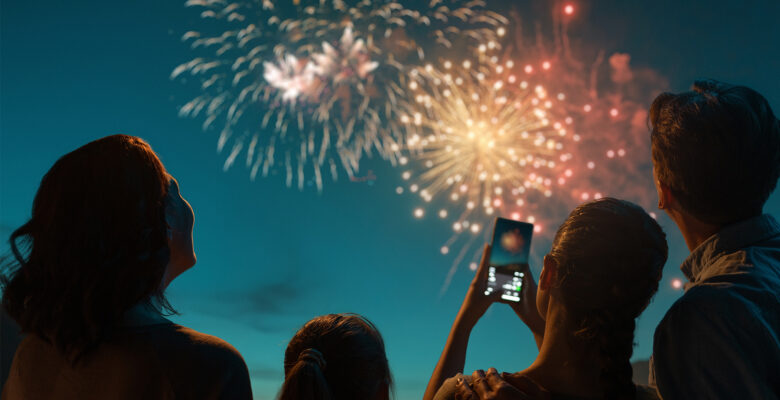
Every year, we fire up the grill, pop the cooler open, and watch the sky light up. It’s a good day. For a lot of families, it ends that way. For too many, it doesn’t.
Fourth of July celebrations have turned into a peak season for impaired driving crashes. The biology of why it’s so dangerous is something most people have never been told. And once you understand it, “I’m fine to drive” will never sound quite the same.
Here’s what the data actually show.
2,719 people were killed in motor vehicle crashes over the Fourth of July holiday period between 2020 and 2024. Of those, 38% of the drivers killed had a blood alcohol concentration (BAC) at or above the legal limit of 0.08 g/dL, according to the National Highway Traffic Safety Administration (NHTSA).
The deadliest hour is 10 p.m., when people are heading home after the fireworks. Mothers Against Drunk Driving (MADD) consistently identifies July 4th as one of the nation’s deadliest holidays for impaired driving.
The data is consistent. The pattern is terribly predictable. The biology explains exactly why.
What happens to your brain within 15 minutes of your first drink.
Alcohol and other substances do not simply “loosen you up.” They hijack your central nervous system at the molecular level, and this starts almost immediately.
With alcohol, because ethanol is both water- and fat-soluble, it crosses the blood-brain barrier rapidly, reaching peak brain concentration within 30 to 90 minutes of consumption. Once inside, it disrupts the two neurotransmitters your brain relies on most. Here’s the scientific explanation.
The GABA-glutamate disruption.
GABA is the brain’s primary inhibitory signal; it quiets neural activity. Glutamate is the primary excitatory signal; it drives alertness, learning, and motor coordination. Alcohol enhances GABA while suppressing glutamate (specifically NMDA receptor function), producing a dual sedation: the brain becomes chemically quieted and slower to respond. Research published in Frontiers in Neural Circuits (2023) confirms these effects happen even at low BAC levels.
The prefrontal cortex goes offline.
The region most responsible for judgment, impulse control, and risk assessment is the prefrontal cortex (PFC). It’s also the first region alcohol disables. A randomized, double-blind, placebo-controlled study in BMC Psychiatry (2022) found that alcohol significantly increased reaction time and impaired psychomotor function while, at the same time, inflating drivers’ confidence in their own driving ability. People who are impaired consistently believe they’re fine. The PFC, which would normally correct that, is already offline.
For teenagers and young adults, this carries extra weight. The prefrontal cortex does not fully mature until the mid-20s, which means adolescents are running a brain that is still actively under construction. Alcohol and other substances don’t pause that construction. They disrupt it. According to the National Institute on Alcohol Abuse and Alcoholism (NIAAA), substance use during this developmental window is linked to lasting reductions in the size of the frontal lobe and hippocampus, and to impairments in attention, memory, and executive function that can persist into adulthood, along with a higher likelihood of developing addiction later in life. The legal drinking age of 21 exists for a reason grounded in neuroscience, not just law. A Fourth of July without substances isn’t a lesser celebration for a teenager. Biologically speaking, it’s the right one.
The dopamine effect: why celebration makes it worse
This is where July 4th becomes neurologically distinct from a regular Saturday.
Alcohol triggers a dopamine surge in the nucleus accumbens, the brain’s reward center. Dopamine is the molecule of anticipation; it fires not just in response to pleasure, but in expectation of it. Holidays prime this system before a single drink is poured. Research published in Neuropharmacology (2016) shows that alcohol then disrupts dopaminergic regulation of the prefrontal cortex, compounding the loss of executive function. The brain, already flooded with social reward, loses more of its capacity to apply the brakes.
This is not a character flaw. It is biology.
Why “I’m fine” is the most dangerous sentence.
Impaired ability combines with impaired self-awareness.
Psychologists Claude Steele and Robert Josephs introduced “Alcohol Myopia Theory” in a paper in American Psychologist. Their finding: alcohol narrows attentional capacity to the most immediate, salient cues in the environment. Under the influence, the brain cannot simultaneously weigh short-term pulls (the party, the drive home) against long-term consequences (crash risk, another family’s loss).
The intoxicated brain does not choose to ignore risk. It becomes biologically incapable of fully perceiving it.
The 2022 BMC Psychiatry study confirmed this, finding that intoxicated people consistently rated themselves as capable of driving even as objective measures showed significant degradation in response time and motor control. The gap between perceived and actual performance widened as BAC rose.
On July 4th, where social norms may expectdrinking, and so many visible cues may suggest “everyone’s celebrating,” alcohol myopia is at its most dangerous. The same happens with the use of other substances.
This is preventable, and that’s the whole point.
The neuroscience here is not an excuse. It’s an explanation for why prevention has to happen before the first drink, not after.
Plan the ride home before you arrive. Designate a driver. Use a rideshare. Call someone. STOP-DWI knows these recommendations work. These are not inconveniences; they’re decisions that work precisely because they’re made by an adult brain that’s still fully intact.
For parents: the conversations you have before the cookout matter more than you think. Teens are watching what adults model, and they’re doing it with a brain that is biologically more vulnerable to every substance on the table. This is why the experts unanimously agree that for teens, the best choice is not to drink or use other substances. When you discuss this, the science backs you up.
The fireworks will be worth it. Make sure everyone’s around to talk about them the next morning.
Sources
- National Highway Traffic Safety Administration (NHTSA). Drunk Driving Statistics and Resources. https://www.nhtsa.gov/risky-driving/drunk-driving
- NHTSA Traffic Safety Marketing. Fourth of July: Drive Sober or Get Pulled Over. https://www.trafficsafetymarketing.gov/safety-topics/drunk-driving/drive-sober-or-get-pulled-over/fourth-july
- Mothers Against Drunk Driving (MADD). July 4th Marks One of Nation’s Deadliest Holidays for Drunk Driving. https://madd.org/press-release/july-4th-marks-one-of-nations-deadliest-holidays-for-drunk-driving/
- National Institute on Alcohol Abuse and Alcoholism (NIAAA). Neuroscience: The Brain in Addiction and Recovery. https://www.niaaa.nih.gov/health-professionals-communities/core-resource-on-alcohol/neuroscience-brain-addiction-and-recovery
- Abrahao, K.P., Salinas, A.G., & Bhattacharya, S. (2023). GABAergic signaling in alcohol use disorder and withdrawal: pathological involvement and therapeutic potential. Frontiers in Neural Circuits, 17, 1218737. https://pmc.ncbi.nlm.nih.gov/articles/PMC10623140/
- Afshar, M., et al. (2022). Effects of alcohol intoxication on driving performance, confidence in driving ability, and psychomotor function: a randomized, double-blind, placebo-controlled study. BMC Psychiatry, 22, 748. https://www.ncbi.nlm.nih.gov/pmc/articles/PMC9671988/
- Ridderinkhof, K.R., et al. (2010). Functional Imaging of Cognitive Control During Acute Alcohol Intoxication. PMC. https://pmc.ncbi.nlm.nih.gov/articles/PMC3005103/
- Pava, M.J., & Woodward, J.J. (2012). Alcohol dose effects on brain circuits during simulated driving: An fMRI study. PMC. https://pmc.ncbi.nlm.nih.gov/articles/PMC2751645/
- Kroener, S., et al. (2012). Impairment of Neuroplasticity in the Dorsolateral Prefrontal Cortex by Alcohol. PMC. https://www.ncbi.nlm.nih.gov/pmc/articles/PMC5509647/
- Abrahao, K.P., & Bhattacharya, S. (2016). Alcohol-induced alterations in dopamine modulation of prefrontal activity. Neuropharmacology, 101, 596-609. https://pmc.ncbi.nlm.nih.gov/articles/PMC4691370/
- Steele, C.M., & Josephs, R.A. (1990). Alcohol Myopia: Its Prized and Dangerous Effects. American Psychologist, 45(8), 921-933. https://www.researchgate.net/publication/20933625_Alcohol_Myopia_Its_Prized_and_Dangerous_Effects
- Strayer, D.L., & Drews, F.A. (2009). Effects of Alcohol on Performance on a Distraction Task During Simulated Driving. PMC. https://pmc.ncbi.nlm.nih.gov/articles/PMC2753192/
- Haorah, J., et al. (2021). Alcohol-Induced Blood-Brain Barrier Impairment: An In Vitro Study. PMC. https://www.ncbi.nlm.nih.gov/pmc/articles/PMC7967408/